Effectively Wild’s Preseason Predictions Update: Meg Rowley
Before Opening Day, the FanGraphs podcast, Effectively Wild, held its annual Preseason Predictions Game. Hosts Ben Lindbergh and Meg Rowley were joined by FanGraphs writers Michael Baumann and Ben Clemens, and each made 10 predictions about the upcoming baseball season. EW listeners voted on the likelihood of each prediction to determine its value, which will be kept secret until the final scores are revealed in November.
At times throughout the season, we’ll be tracking the various predictions here on the Community Blog to see how each competitor is faring. Having already covered Baumann and Clemens, we’ll now review the full ballot of Meg Rowley.
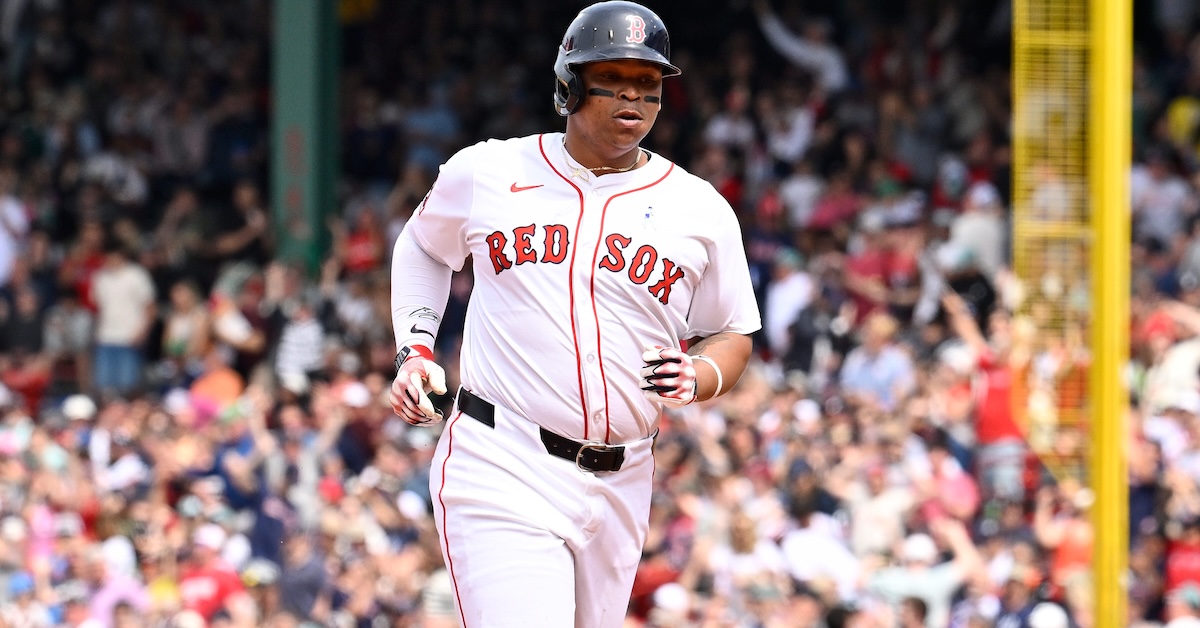
1. Isaac Paredes will earn more fWAR than Kyle Tucker.
Originally a close race in the early months, Kyle Tucker was beginning to pull away as May turned to June. July only brought more clarity to this prediction due to Isaac Paredes being placed on the IL for what was described as a “severe” hamstring injury. He’s attempting to avoid season-ending surgery in the hopes that he can return to action, but given that he’s since been moved to the 60-day IL, it will likely be too little too late for the purposes of this exercise. Should he find his way back onto the field, he’ll be at 2.7 fWAR — well behind whatever Tucker can add to his 4.0 fWAR in the interim. (The only thing keeping this from being an even more foregone conclusion? Tucker’s massive struggles in August mean he’s actually below his season high of 4.2 fWAR, having hit only .069 in his last eight games.)
Verdict: Very unlikely
2. At least three primary catchers (as defined by FanGraphs) will hit 30+ HR this season.
Regardless of how big Cal Raleigh’s dumper is, he still only counts as one player, and that’s going to be Meg’s biggest obstacle toward earning points. For Raleigh, we don’t even need to invoke a projection system — he’s already at 47 home runs and threatening to completely lap the field.
But that still leaves us waiting for two more names, and for ages it’s been difficult to feel confident about any candidates stepping forward. Logan O’Hoppe was the best of the rest through the first half, but was still well behind Raleigh, and he hasn’t been able shake a rough stretch of play that started in late May. He’s fallen down the leaderboards with only a single home run added since midseason, so he isn’t likely to factor in the result. Hunter Goodman was the only other name on the list that jumped out as a genuine threat during the first three months. He had 14 as June turned to July, and unlike O’Hoppe, Goodman has steadily added to his total, with 11 homers since then. He is projected to clip the target goal; Depth Charts and Steamer both expect him to smash six more, while ZiPS tabs him for five more, which would put him at exactly 30. Still, that would only make for two 30-homer catchers.
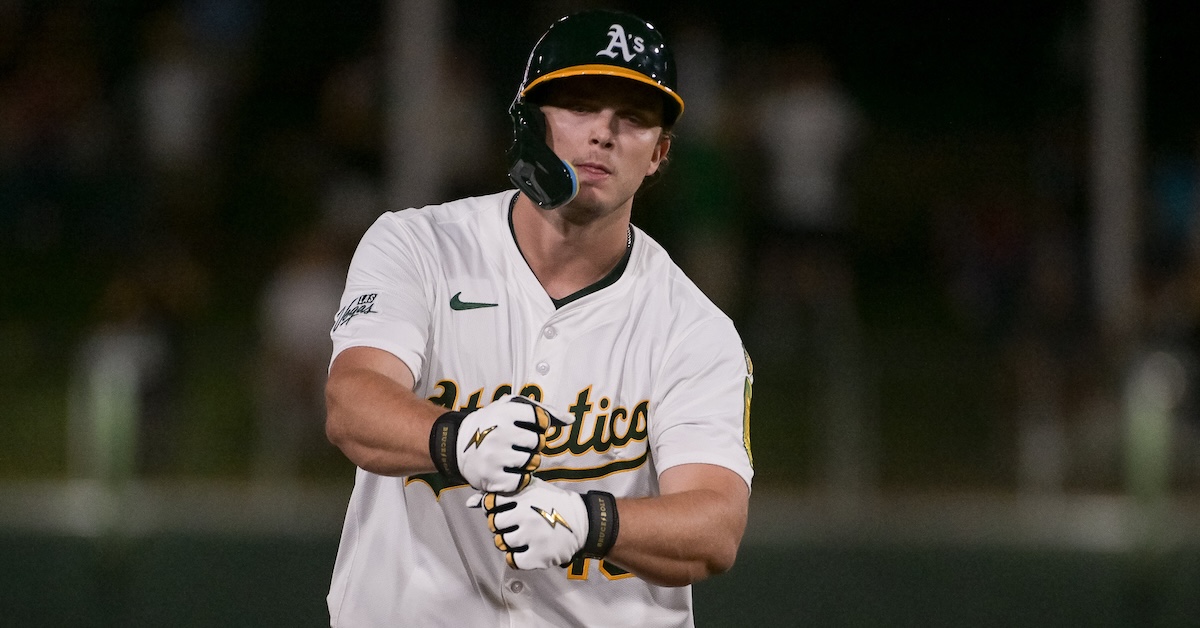
The good news for Meg is that reinforcements have arrived in the form of Shea Langeliers and Salvador Perez! The A’s backstop is now leading the league in second-half home runs (16), bringing him all the way up to 28 on the year and making him a virtual lock to reach 30 over the final six weeks. He is the third catcher — along with Raleigh and Goodman — projected to eclipse the threshold. Meanwhile, Perez has cooled off slightly from his post-All-Star Game barrage, but he enters this weekend with 22 homers and is projected for six more. He’s close enough that he provides Meg some insurance in the event that Goodman goes cold.
Verdict: Not so down in the dumps after all!
3. We will have no repeat division winners other than the Los Angeles Dodgers.
Thanks to FanGraphs’ Playoff Odds, we can actually quantify this precisely, by combining the odds that the Dodgers repeat along with the odds that nobody else does:
| 2024 Division Winner | 2025 Odds | Prediction Odds |
|---|---|---|
| Dodgers | 83.7% | 83.7% |
| Brewers | 95.9% | 4.1% |
| Phillies | 84.6% | 15.4% |
| Astros | 51.5% | 48.5% |
| Yankees | 18.1% | 81.9% |
| Guardians | 1.2% | 98.8% |
| Calculated Odds | 0.21% |
Besides the Dodgers repeating (which on its own looks not as certain as before), only one domino needs to fall for this prediction to go awry. For much of the season, the Yankees were in a commanding position to play spoiler, having peaked at 91.8%, but their slump (combined with the newfound momentum of the Blue Jays) has left them on the wrong side of the ledger. However, they have been supplanted by the Phillies, who now have a firmer grasp on the NL East, and the full goose bozo stampede that is the Brewers. The math doesn’t lie — the odds for this prediction are less than half of a percent.
Verdict: Very Unlikely
4. The New York Mets will miss the postseason.
Despite being 5.5 games behind the Phillies in the NL East, the Mets are projected to have a 77.4% chance of playing October baseball, even though they are only a half game ahead of the Reds for the final Wild Card spot. The reason? A softer remaining schedule coupled with a stronger lineup shake out to FanGraphs’ predicting 86.3 wins for the Mets, firmly ahead of 82.5 for the Reds. Yes, it’s the Mets we’re talking about here, so anything can happen, but at the moment they appear to be in the clear.
Verdict: LOLMets?
5. Nick Kurtz will earn more fWAR than Travis Bazzana.
Travis Bazzana isn’t even in the majors yet, but this prediction has still seen multiple twists and turns. The first was Nick Kurtz getting an early call-up, making his debut on April 23. But from there, he struggled to produce, and fell as low as -0.4 fWAR on May 19. So, technically, Bazzana was in the lead! Could he earn his own call-up to make this a true contest?
The answer to that question, however, has proven to be elusive. What initially felt like an expected 2025 debut suffered a setback when Bazzana was placed on the IL after straining his oblique during a doubleheader in Double-A action, only returning to the active roster on July 15. Yes, he’s been solid since, and was promoted to Triple-A on August 10, but any buzz regarding a trip to Cleveland has been completely absent. Eric Longenhagen concurred in his breakdown of the Top 48 Guardians prospects, believing that Bazzana’s timeline is “probably more in the late-2026 or early-2027 range”.
But, of course, you likely know what happened next: Kurtz hopped onto the express train to Rookie of the Year buzz, grabbing the attention of sportswriters everywhere. His four-homer, six-hit night against the Astros on July 25 firmly cemented that this was easily one of Meg’s best predictions since the exercise began, and he now is the proud owner of 3.9 fWAR at time of this writing. “Big Amish” can stop churning if he wants, because Meg’s got points coming her way.
I think @megrowler.fangraphs.com has earned the right to gloat a bit about her Kurtz > Bazzana prediction. WOW.
— Effectively Wild Stats (@ewstats.com) 2025-07-26T03:04:17.029Z
Verdict: Very Likely
6. Chandler Simpson will lead the league in stolen bases.
If I had written this update earlier, the vibes would have been immaculate. In only 35 games of action, Chandler Simpson had compiled 19 stolen bases, was among the league leaders, and was projected to finish the season ahead of all comers. And then, at the end of May, the Rays demoted him to Triple-A, a move which Rays manager Kevin Cash called a “tough decision,” and what I call a “crime against baseball” (though only one of us has to worry about being diplomatic about roster construction).
In their defense, the Rays genuinely were in a difficult spot: Jake Magnum was coming off the IL, and an already crowded outfield meant that their best move was to demote Simpson or lose Christopher Morel altogether, since he was out of options. The Rays chose the path that kept everyone available while giving Simpson regular playing time, instead of playing a bench role at Steinbrenner Field. He was back in less than a month’s time, added back to the roster on June 24 and swiping his first bag only three days later, and staying in form ever since.
So where does that leave us? Thankfully, with a competitive race! Simpson finds himself only four stolen bases behind current leader José Caballero, and ZiPS can’t foresee much daylight between the two over the remainder of the season. If Simpson stays healthy and the Rays continue to provide him with playing time he deserves, good things could be in store.
Verdict: If this doesn’t happen I will personally blame Jeff Sullivan
7. The Athletics will finish second in the AL West.
Unlike the White Sox, who had their pick of days to lead the AL Central for Ben Clemens, the Athletics need to end the season as runners-up. Also unlike the White Sox, the A’s actually managed to briefly grab hold of that rung on the ladder, sitting in second place for most of early May. Sadly, that stretch looks to be all they’re capable of mustering, and they have since returned to being cellar dwellers. Now 14 1/2 games back of the Astros and 11 behind the Mariners, who currently occupy the spot they need, I don’t know if there’s much in the way of silver linings to find here.
Verdict: Sell the team
8. At least two major league teams will announce new controlling ownership.
Before I begin my update, I just wish to quote the very end of this prediction’s discussion, during which the panel interrogated multiple qualifications:
Ben L: Alright. I think hopefully that’s specific and precise enough for us to be able to call this.
Meg: I think it is.
Ben L: Yeah, I think we’ll probably know it.
Meg: You’ll know! You’ll know. (defiantly) We’ll know!
*sigh*
The buzz around this prediction spiked when the Chicago White Sox revealed a deal between owner Jerry Reinsdorf and billionaire investor Justin Ishbia to transfer shares over the next several years, with Ishbia being able to hold a controlling stake as early as 2029. Based on the wording of the announcement and how the language of the prediction can be parsed, as well as Meg’s spelling out that the sale does not have to be completed by the deadline, it simply must be announced, I felt that it met the requirements. The evening that the news broke, I shared on social media that it counted toward this prediction being fulfilled.
However, some EW fans have disagreed, and I’m more than willing to say they have a valid argument: Technically, the announcement wasn’t about “new controlling ownership,” it was “a deal in place between two parties that builds a framework for said parties to have the option to transfer controlling ownership.” There is definitely a sequence of events where neither party exercises their part in the deal, and Reinsdorf remains owner of the White Sox past the spry young age of 98.
My counter to this is that a contract of this scope isn’t signed lightly, and doesn’t happen unless both sides go into the deal fully intending to see the deal through. Additionally, the tone of the press release, the quotes from both sides of the deal, and the analysis of media members close to the the relevant parties all communicated this is for all intents and purposes a succession plan. Given the long time frame that the deal required, it was more a pragmatic move for the transactions to be phrased as “options,” rather than an indication of indecision.
Meanwhile, the news cycle had barely cooled on this state of affairs when it was let slip that the Tampa Bay Rays are in “advanced negotiations” to be sold to a group of investors, who have reportedly signed a letter of intent. That letter has an expiration date, and should a deal not be struck, word is that another interested party is ready to step in and make a competing offer if given the opportunity. It’s been about a month since that report surfaced, and there’s no new info, but all in all, it’s looking promising for someone to put pen to paper and wrap this prediction up.
The background noise to all of this has been the ongoing saga that is my beloved Minnesota Twins. The Pohlad family making good on their professed desire to sell the Twins would, from my perspective, solve multiple problems: My favorite team would have someone less likely to cut payroll immediately following their greatest success in decades, and any controversy surrounding the White Sox factoring into this prediction would be moot — assuming the Rays rumors bear fruit. But those hopes were dashed the morning of August 13 by a press release reversing course, and instead simply adding two new groups of minority investment groups with no path toward a transfer of control.
With all of that laid before us, we await news from Florida, and any discourse that may follow.
Verdict: For the love of God, let’s make a deal!
9. Ethan Holliday will be the first pick in this year’s MLB amateur draft.
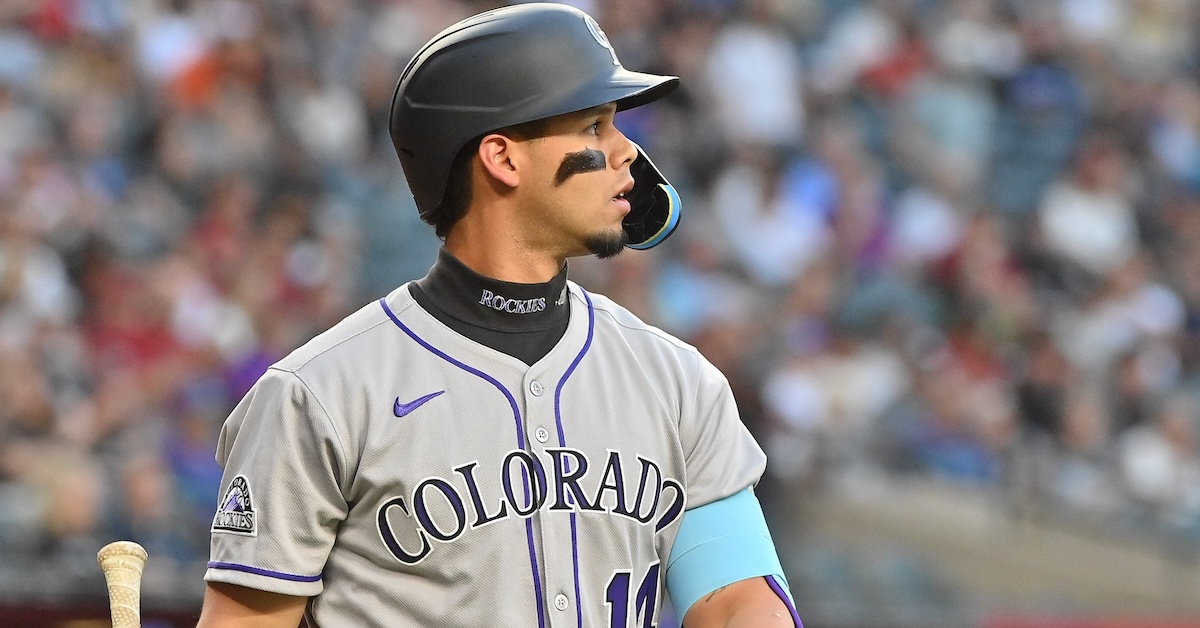
As All-Star weekend approached, Ethan Holliday topped multiple mock drafts, including Jim Callis’ projections for MLB.com. Holliday was spoken of as one of the two best high school picks, alongside fellow shortstop Eli Willits. That, along with multiple players on the collegiate side earning plenty of attention, made for a situation where there was no clear-cut prospect separating himself from the pack. The best evidence for this was FanGraphs having Holliday and Willits ranked ninth and 32nd on its draft board, respectively. In the end, the poetic result won out, with Holliday being selected fourth to play for his father’s Colorado Rockies. A fitting outcome, but not the one needed here.
Verdict: False
10. Ketel Marte will win the NL MVP.
Only days after inking a big extension with the Diamondbacks, Ketel Marte’s MVP campaign took a major hit when he suffered a left hamstring injury on April 4 and missed a full month of playing time. On the bright side, Marte has been playing well since then (4.3 fWAR as of August 21), and was selected as the starting second basement for the NL All-Star team.
However, his path toward an MVP award is hampered by obstacles on multiple fronts. Statistically, Marte would need to challenge Shohei Ohtani (which was predictable), Kyle Schwarber (which was less so), and Pete Crow-Armstrong (which was not). But with all three of these players comes the other major obstacle: media narrative. Ohtani’s star shines incredibly bright as it always has, and PCA’s ascendancy has made him a darling of sportswriters nationwide. Schwarber is in the middle of his best season yet, and he’s a fun and media-friendly player. It’s fair to say that Marte doesn’t have the same support behind him. In recent days, much ink has been spilled on accusations of his leaving the team to go on vacation and being “a diva in the clubhouse,” as well as on his full-blown apology tour trying to mend fences. It’s not a stretch to imagine that this could cloud his MVP case in the eyes of BBWAA voters.
If it were up to me, and it was my responsibility to coax Marte back into contention, my first question would be “any chance you’ve got a good knuckleball?” (This is one of the many reasons why I’m not employed in a front office.)
Verdict: Unlikely