Hardball Retrospective – What Might Have Been – The “Original” 2008 Mariners

In “Hardball Retrospective: Evaluating Scouting and Development Outcomes for the Modern-Era Franchises”, I placed every ballplayer in the modern era (from 1901-present) on their original team. I calculated revised standings for every season based entirely on the performance of each team’s “original” players. I discuss every team’s “original” players and seasons at length along with organizational performance with respect to the Amateur Draft (or First-Year Player Draft), amateur free agent signings and other methods of player acquisition.  Season standings, WAR and Win Shares totals for the “original” teams are compared against the “actual” team results to assess each franchise’s scouting, development and general management skills.

Expanding on my research for the book, the following series of articles will reveal the teams with the biggest single-season difference in the WAR and Win Shares for the “Original” vs. “Actual” rosters for every Major League organization. “Hardball Retrospective” is available in digital format on Amazon, Barnes and Noble, GooglePlay, iTunes and KoboBooks. The paperback edition is available on Amazon, Barnes and Noble and CreateSpace. Supplemental Statistics, Charts and Graphs along with a discussion forum are offered at TuataraSoftware.com.

Don Daglow (Intellivision World Series Major League Baseball, Earl Weaver Baseball, Tony LaRussa Baseball) contributed the foreword for Hardball Retrospective. The foreword and preview of my book are accessible here.

Terminology

OWAR – Wins Above Replacement for players on “original” teams

OWS – Win Shares for players on “original” teams

OPW% – Pythagorean Won-Loss record for the “original” teams

AWAR – Wins Above Replacement for players on “actual” teams

AWS – Win Shares for players on “actual” teams

APW% – Pythagorean Won-Loss record for the “actual” teams

Assessment


The 2008 Seattle Mariners 

OWAR: 41.0     OWS: 251     OPW%: .519     (84-78)

AWAR: 21.3      AWS: 183     APW%: .377     (61-101)

WARdiff: 19.7                        WSdiff: 68  

The “Original” 2008 Mariners finished a few percentage points behind the Athletics for the AL West crown but out-gunned the “Actual” M’s by a 23-game margin. Alex Rodriguez (.302/35/103) paced the Junior Circuit with a .573 SLG. Raul Ibanez (.293/23/110) established career-highs with 186 base hits and 43 two-base knocks.  Ichiro Suzuki nabbed 43 bags in 47 attempts and batted .310, topping the League with 213 safeties. Jose Lopez socked 41 doubles and 17 long balls while posting personal-bests with 191 hits and a .297 BA. Adrian Beltre clubbed 25 four-baggers and earned his second Gold Glove Award for the “Actuals”.

Ken Griffey Jr. ranked seventh in the center field charts according to “The New Bill James Historical Baseball Abstract” top 100 player rankings. “Original” Mariners chronicled in the “NBJHBA” top 100 ratings include Alex Rodriguez (17th-SS) and Omar Vizquel (61st-SS).


  Original 2008 Mariners                           Actual 2008 Mariners


STARTING LINEUP POS OWAR OWS STARTING LINEUP POS AWAR AWS
Raul Ibanez LF 1.77 19.64 Raul Ibanez LF 1.77 19.64
Ichiro Suzuki CF/RF 3.36 19.48 Jeremy Reed CF -0.18 4.19
Shin-Soo Choo RF 2.86 14.97 Ichiro Suzuki RF 3.36 19.48
Ken Griffey, Jr. DH/RF 0 13.1 Jose Vidro DH -1.34 1.53
Bryan LaHair 1B -0.42 1.66 Richie Sexson 1B 0.06 4.43
Jose Lopez 2B 2.73 18.55 Jose Lopez 2B 2.73 18.55
Asdrubal Cabrera SS/2B 1.85 11.92 Yuniesky Betancourt SS 0.2 8.69
Alex Rodriguez 3B 4.99 27.21 Adrian Beltre 3B 2.45 16.09
Jason Varitek C 0.7 8.74 Kenji Johjima C -0.01 6.1
BENCH POS AWAR AWS BENCH POS AWAR AWS
David Ortiz DH 1.37 12.01 Willie Bloomquist CF 0.15 3.92
Ramon Vazquez 3B 1.05 9.63 Miguel Cairo 1B -0.64 3.17
Adam Jones CF 1 9.12 Jeff Clement C -0.36 2.88
Yuniesky Betancourt SS 0.2 8.69 Jamie Burke C -0.16 1.89
Greg Dobbs 3B 0.7 7.22 Bryan LaHair 1B -0.42 1.66
Kenji Johjima C -0.01 6.1 Luis Valbuena 2B 0.15 1.19
Omar Vizquel SS -0.22 3.94 Wladimir Balentien RF -1.18 1.09
Willie Bloomquist CF 0.15 3.92 Greg Norton DH 0.21 0.99
Jeff Clement C -0.36 2.88 Brad Wilkerson RF -0.13 0.6
Luis Valbuena 2B 0.15 1.19 Rob Johnson C -0.3 0.35
Wladimir Balentien RF -1.18 1.09 Matt Tuiasosopo 3B -0.28 0.32
Chris Snelling 0.16 0.58 Mike Morse RF 0.03 0.28
Rob Johnson C -0.3 0.35 Tug Hulett DH -0.2 0.16
T. J. Bohn LF 0.05 0.34 Charlton Jimerson LF -0.03 0
Matt Tuiasosopo 3B -0.28 0.32
Jose L. Cruz LF -0.34 0.17

Derek Lowe and Gil Meche compiled identical records (14-11) while starting 34 games apiece. “King” Felix Hernandez contributed nine victories with an ERA of 3.45 in his third full season in the Major Leagues. Brian Fuentes accrued 30 saves while fashioning an ERA of 2.73 along with a 1.101 WHIP. “T-Rex” whiffed 82 batsmen in 62.2 innings pitched.

  Original 2008 Mariners                        Actual 2008 Mariners 

ROTATION POS OWAR OWS ROTATION POS AWAR AWS
Derek Lowe SP 4.16 15.69 Felix Hernandez SP 3.99 13.45
Gil Meche SP 3.7 13.81 Ryan Rowland-Smith SP 2.1 8.39
Felix Hernandez SP 3.99 13.45 Erik Bedard SP 1.24 5.4
Ryan Rowland-Smith SP 2.1 8.39 Jarrod Washburn SP 0.7 5.11
Joel Pineiro SP -0.39 3.75 R. A. Dickey SP 0.2 3.28
BULLPEN POS OWAR OWS BULLPEN POS OWAR OWS
Brian Fuentes RP 1.88 11.8 Brandon Morrow SW 1.09 7.19
Matt Thornton RP 1.95 9.41 Roy Corcoran RP 0.71 6.7
Ryan Franklin RP 0.52 7.47 J. J. Putz RP 0.4 5.24
Brandon Morrow SW 1.09 7.19 Sean Green RP -0.56 3.59
George Sherrill RP 0.03 6.43 Arthur Rhodes RP 0.48 3.03
Aquilino Lopez RP 0.93 6.13 Cesar Jimenez RP 0.66 2.28
Damaso Marte RP 0.52 6.02 Randy Messenger RP 0.19 0.84
J. J. Putz RP 0.4 5.24 Mark Lowe RP -1.11 0.68
Cha-Seung Baek SP 0.56 3.67 Cha-Seung Baek SW -0.11 0.56
Mike Hampton SP 0.34 2.32 Jake Woods RP -0.3 0.05
Cesar Jimenez RP 0.66 2.28 Miguel Batista SP -1.89 0
Ron Villone RP -0.13 1.94 Ryan Feierabend SP -0.88 0
Rafael Soriano RP 0.28 1.78 Eric O’Flaherty RP -1.07 0
Shawn Estes SP 0.03 0.88 Carlos Silva SP -1.91 0
Mark Lowe RP -1.11 0.68 Justin Thomas RP -0.07 0
Scott Patterson RP 0.22 0.43 Jared Wells RP -0.31 0
Kameron Mickolio RP -0.09 0.08
Ryan Feierabend SP -0.88 0
Eric O’Flaherty RP -1.07 0
Justin Thomas RP -0.07 0


Notable Transactions

Alex Rodriguez 

October 30, 2000: Granted Free Agency.

January 26, 2001: Signed as a Free Agent with the Texas Rangers.

February 16, 2004: Traded by the Texas Rangers with cash to the New York Yankees for a player to be named later and Alfonso Soriano. The New York Yankees sent Joaquin Arias (April 23, 2004) to the Texas Rangers to complete the trade.

October 29, 2007: Granted Free Agency.

December 13, 2007: Signed as a Free Agent with the New York Yankees. 

Derek Lowe

July 31, 1997: Traded by the Seattle Mariners with Jason Varitek to the Boston Red Sox for Heathcliff Slocumb.

November 1, 2004: Granted Free Agency.

January 11, 2005: Signed as a Free Agent with the Los Angeles Dodgers.

Shin-Soo Choo

July 26, 2006: Traded by the Seattle Mariners with a player to be named later to the Cleveland Indians for Ben Broussard and cash. The Seattle Mariners sent Shawn Nottingham (minors) (August 24, 2006) to the Cleveland Indians to complete the trade. 

Gil Meche

October 31, 2006: Granted Free Agency.

December 13, 2006: Signed as a Free Agent with the Kansas City Royals.

Ken Griffey Jr. 

February 10, 2000: Traded by the Seattle Mariners to the Cincinnati Reds for Jake Meyer (minors), Mike Cameron, Antonio Perez and Brett Tomko. 

David Ortiz 

September 13, 1996: the Seattle Mariners sent David Ortiz to the Minnesota Twins to complete an earlier deal made on August 29, 1996. August 29, 1996: The Seattle Mariners sent a player to be named later to the Minnesota Twins for Dave Hollins.

December 16, 2002: Released by the Minnesota Twins.

January 22, 2003: Signed as a Free Agent with the Boston Red Sox.

Honorable Mention

The 1999 Seattle Mariners 

OWAR: 46.4     OWS: 296     OPW%: .549     (89-73)

AWAR: 33.8      AWS: 237     APW%: .488     (79-83)

WARdiff: 12.6                        WSdiff: 59  

The “Original” 1999 Mariners secured the American League Western Division title by six games over the Rangers. The “Actuals” placed third, sixteen games behind Texas. Ken Griffey Jr. (.285/48/134) paced the circuit in home runs, tallied 123 runs and collected his tenth Gold Glove Award. Edgar Martinez (.337/24/86) topped the League with a .447 OBP. Alex Rodriguez (.285/42/111) swiped 21 bags and scored 110 runs. Slick-fielding shortstop Omar Vizquel posted career-highs in batting average (.333), runs scored (112) and base hits (191) while stealing successfully on 42 of 51 attempts. Tino Martinez clubbed 28 four-baggers and plated 105 baserunners. Bret Boone tagged 38 doubles and surpassed the century mark in runs. Jason Varitek drilled 39 two-base knocks and swatted 20 big-flies during his first full campaign.

Mike Hampton (22-4, 2.90) placed runner-up in the Cy Young Award balloting. Derek Lowe notched 15 saves in 74 relief appearances. Dave Burba contributed a 15-9 record and set personal-bests with 34 starts and 220 innings pitched.

On Deck

What Might Have Been – The “Original” 1993 Angels

References and Resources

Baseball America – Executive Database

Baseball-Reference

James, Bill. The New Bill James Historical Baseball Abstract. New York, NY.: The Free Press, 2001. Print.

James, Bill, with Jim Henzler. Win Shares. Morton Grove, Ill.: STATS, 2002. Print.

Retrosheet – Transactions Database

The information used here was obtained free of charge from and is copyrighted by Retrosheet. Interested parties may contact Retrosheet at “www.retrosheet.org”.


Seamheads – Baseball Gauge

Sean Lahman Baseball Archive


The St. Louis Cardinals Have a Type

This series will cover various trends I’ve observed major-league baseball teams following. Some trends will be analytical while others will be more…”conceptual.” Trends may span a season, or even several, it doesn’t matter, I don’t want to limit myself out of the box. Ideally, I’d like to cover all 30 teams, but I also don’t want to expect too much of myself out of the box, either. After all, I don’t have Francisco Lindor’s smile to pull it off.

Image result for francisco lindor trips on bat gif

Maybe that kind of thinking is limiting — not the part about Lindor’s smile (though in a weird way it does tie in), but maybe I like to undertake something with the caveat that I might not follow through because of experience, mine or others (see Stevens, Sufjan — 50 states project). Or maybe I don’t want to underestimate the extent of my laziness. Or maybe I’m just a glass-half-empty kind of guy…

And maybe all of this relates to my face.

From Wikipedia: “Physiognomy is the assessment of a person’s character or personality from his or her outer appearance, especially the face.”

It’s no secret that we’re all judged on our outer appearance. Some studies have shown it even relates to how well we’re paid. A predisposition towards handsome exists in baseball, too. It’s in the old scouting maxim, “the good face,” which essentially is the baseball colloquialism for “hottie.” But it can also refer to the potential presence of naturally-elevated levels of testosterone, as a strong jaw and well-defined cheekbones are sometimes indicative of the hormone.

Hogwash! Right? Well, have you ever wondered what it would be like to look like Brad Pitt and thought about how differently people would react to you? Now, I’m not talking about a matter of right or wrong, but people would generally respond more positively to you, both socially and professionally, and that does have an impact on confidence, which plays a massive, albeit intangible role in a baseball player’s on-field success.

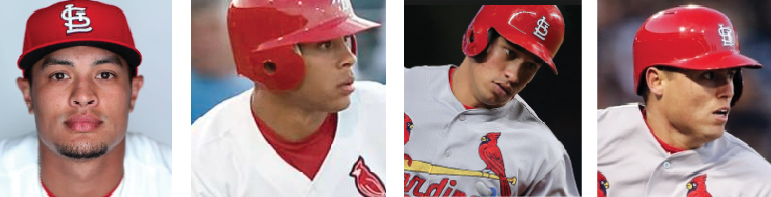
But, come on. With all the advanced methodology we have to evaluate players, isn’t the “The Good Face” adage a thing of the past? I’m sure it’s probably lost some of its weight in the player-evaluation process, but it hasn’t disappeared. In fact, in the evaluation process used by (arguably) the most successful team of this decade, it’s very much alive. In recent memory, there have been enough handsome doppelgangers in their mix to wonder if the “Cardinal way” isn’t some iron-clad philosophy the organization established to allow them to get the most out of their young players, but that it might just be a certain type of guy!

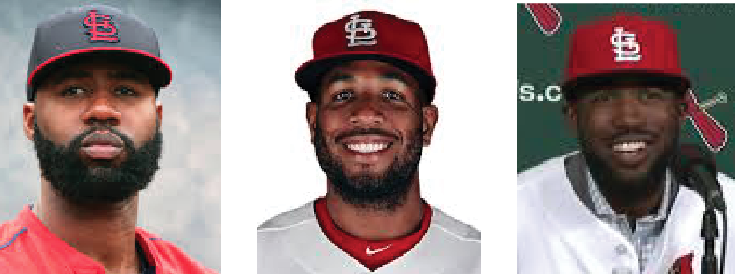
You’re at FanGraphs, and so I assume you’re a savvy individual and that you know a ruse when you read one, but I want to qualify this writing by saying that this proposition is roughly ~0.0000000000000001% serious. Okay, so essentially, there are six archetypes for Cardinals players’ faces.

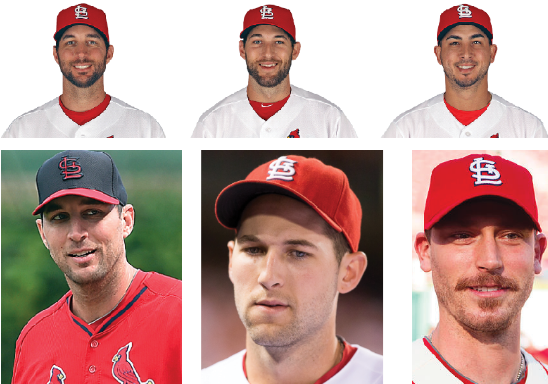
  1. The Wain-Os

oval

Pseudoscience says: “If you have an oval face shape, you always know the right things to say.”

wain0

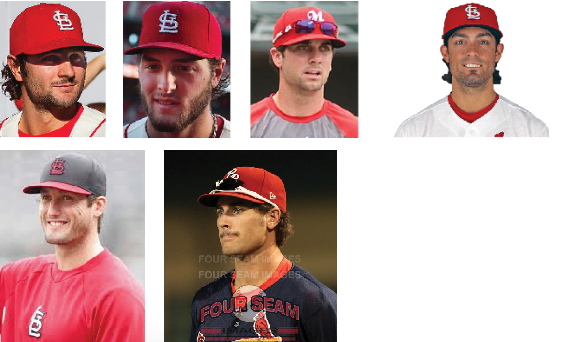
2. The Kozmakazies

square

Pseudoscience says: “If you have a square-shaped face, you are gung-ho and a total go-getter.”

squaress

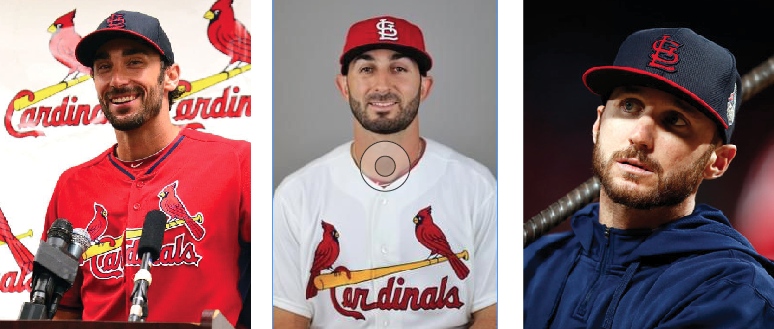
3. The DesCarpenSons

rectang

Pseudoscience says: “You value logic and you’re a really good thinker. Plus, you’re an awesome planner.”

4. The Lynnburger

heart

5. The Ambiguous Pham

ambig

Pseudoscience says: “If you have a diamond face shape, you’re a control freak. You’re very detail-oriented…”

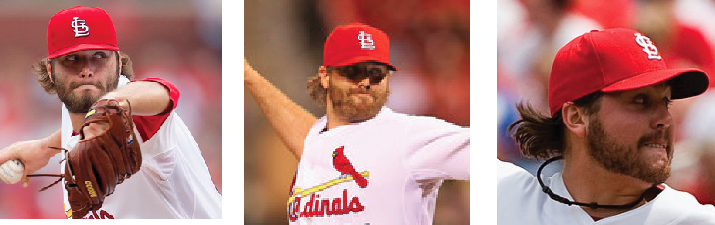
6. We Don’t Want No Scruggs

oblon

Pseudoscience says: See the Wain-Os

Yes, it helps they’re in the same uniform, and yes, I very obviously cherry-picked some of those, but aren’t you still a little floored? The variation here rivals the lack of distinguishability featured among the male contestants on the Bachelorette.

So isn’t this proof of old-school scouting at work? What gives with all the talk of the Cardinals’ cutting-edge front office — are they just masquerading with the hiring of NASA data analysts and organizational philosophies? Or have they truly married the new school and old school? Maybe there is something to building a roster of similar-looking players that prevents “fault lines” from forming.

Or maybe…

Think back to the hacking scandal of 2015. The Cardinals’ new Director of Scouting, Christopher Correa, hacked the Astros’ database for information on players regarding the draft, bonuses, and trade talks. Keep in mind, he was working for the Cardinals, not a brand-new expansion team; he could’ve hired anyone he wanted to work for him. He could’ve had his own NASA data analyst, just like Jeff Luhnow had done before him. I know that in the minds of these men, there’s a lot at stake, and so they look for any competitive advantage they can, but this scenario feels like it’s the smartest kid in class copying off the other smartest kid in class on a math test.

So what did Jeff Luhnow have access to that Correa didn’t?!

It was one file, actually. A file buried deep within the infrastructure of the Astros’ database. A file called “Stardust” (Yes, like in Rogue One). Allow me to explain.

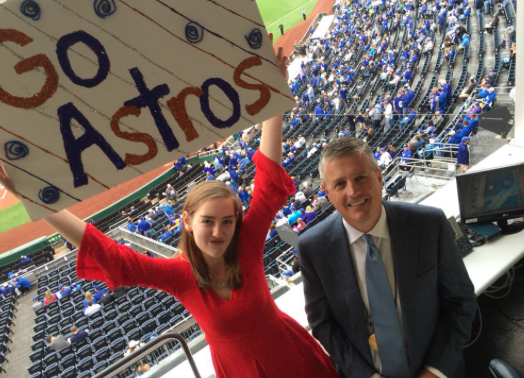
This is daughter Luhnow. Her name and age are unknown (Jeff did not respond to my tweets), but my wife estimates her to be 19 in this photo. If we work off that number, she’s at least 20 now, and that means she’s probably been able to identify boys she thinks are cute for around 15 years, which lines up perfectly with when her dad was hired by the Cardinals in 2003.

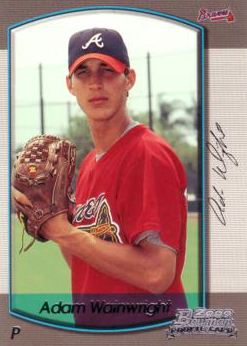
Imagine it, “it’s easy if you try;” one day, a five-year-old daughter Luhnow wandered into her dad’s office and climbed up onto his lap while he was looking at some files of some players he was targeting to acquire. Mostly just talking to himself, Jeff explained the pros and cons of each player to his daughter and showed her their pictures. When he got to a young pitcher in the Atlanta Braves’ farm system, she put her hands to her mouth and giggled. “What’s so funny?” Jeff asked his suddenly-bashful daughter. Her face was nuzzled in her dad’s chest, so the words were a bit muffled, but Jeff heard them clear as day. “He’s cute,” she responded.

It was a strange moment for Jeff — he wrestled back the protective instincts welling up inside him, but as he looked at the picture of the lanky, young right-handed pitcher, he realized that she wasn’t wrong. Adam Wainwright was handsome in an awkward, President’s son kind of way.

While this was the deciding factor for Jeff, he was thrilled that he wouldn’t have to admit that to his bosses, because Wainwright was also a top-100 prospect. So the Cardinals sent J.D. Drew and Eli Marrero to the Braves for Wainwright, Jason Marquis, and Ray King (an admittedly motley crew).

Jeff remembered that moment and would, from time to time, call his daughter into his office and gauge her reactions to the players he’d show her. Eventually, however, he didn’t need to call her in anymore. Daughter Luhnow liked baseball, and liked looking at the pictures of the young men; it was like reading a Teen Beat magazine with her dad!

Before I go any further, I want to note that this is one of those conceptual pieces I referred to in the intro, and that the parts about daughter Luhnow are entirely fictitious. There are also no underlying misogynistic themes at play here. I believe a woman could run a major-league baseball team as well as any man — I just think the idea of a team as renowned and successful as the Cardinals being run on the lustful whims of a teenage girl is really funny.

So the way I see it, she had her own Excel spreadsheet where she could rate the features of potential acquisitions on the same 20 – 80 scale as scouts. She could comb through high-school, college, minor-league, and major-league rosters and highlight her favorite guys by coming up with an overall score.

This authoritative list, while completely undisclosed until now, has unwittingly been at the center of a couple of controversies. It is what ultimately drove the wedge between Walt Jocketty and the Cardinals, and also, as previously mentioned, is the holy grail that Christopher Correa was in search of when he hacked the Astros’ database — and what he is currently serving a 46-month jail sentence for.

About the moves that Correa made without the elusive “Stardust” file. He had an idea of her type of guy based on previous transactions, and he was able to make some quality, daughter-Luhnow-inspired acquisitions. Of course, that’s hardly a silver lining. Try explaining to your cell mate that you’re in prison for hacking into someone else’s computer for a list of cute, young men (some of which are still in high school!).

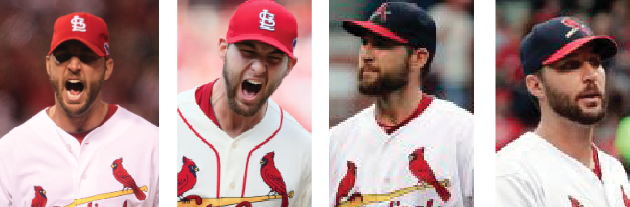
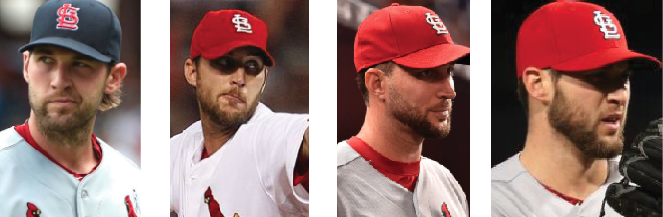
You get it. You’re on board. The Cardinals’ success has largely been driven by a teenager’s romantic fantasies. Okay, maybe not. Regardless, I still have a hard time telling the difference between Adam Wainwright and Michael Wacha and I want to see if you are any better. Here are eight pictures of the two Cardinal pitchers, four of each; in the comments section, please attempt to sequence these correctly, and that’s it. This is what happens in the doldrums of the offseason!

answer-key


The Mets’ Suboptimal Outfield

Consider the current payrolls of two teams:

Team            Payroll          MLB Rank

Team A      $133.7M                9

Team B      $133.3M               10

You, being a reader of some intellectual attainment, have probably divined that one of these teams is the New York Mets. That would be Team A. Team B is the Seattle Mariners. As we enter 2017, just under eight years after Bernie Madoff’s guilty plea, the Mets still have the payroll of a team playing the 18th-largest city in America; four of NYC’s five boroughs have more people.

Mets’ GM Sandy Alderson has assembled a team that is essentially the anti-Cubs: the Mets’ core is their young, cost-controlled pitching staff, which was the best in the majors last year according to FIP-. Supporting the staff is a cast of position players that produce roughly MLB-average offense (16th last year in wRC+) and defense (15th in UZR/150). The Mets payroll is upside-down, heavily invested in the modestly effective position players, while the outstanding pitchers mostly throw for food. The most expensive pitcher on their roster is Addison Reed, at $7.75M. At Mets prices, for the coming year, that would buy you around one-third of Yoenis Cespedes or David Wright.

The Alderson formula has produced three years of 80+ win teams from 2014-2016 (82, 89, and 87, according to Pythagoras). But clouds are gathering. Seven of the eight starting position players on opening day will be at least 30 years old. Even the young pitching is less young than you might think. Matt Harvey will be 28, and Jacob deGrom already is. The pitchers’ long war with soft tissue has intensified: After last season, Steven Matz finally donated his bone spurs to science, but worryingly is planning to throw slower in 2017. Perhaps necessity will beget virtue, but Matz’ room for error may decline with his average velo. Noah Syndergaard still has his bone spurs, and Zack Wheeler may never start another major-league game. And so on.

Which brings us to today’s topic, which is focused on the Mets’ peculiar outfield, and their especially peculiar decision to give Jay Bruce most of the starts in right. The Mets’ failure to move Bruce in the offseason has been well-chronicled. Bruce had seemed to get his career back on track with 402 blistering plate appearances with the Reds in 2016, and the Mets jumped at the chance to get him in exchange for two pieces deemed expendable (Dilson Herrera and Max Wotell). Bruce cratered in New York, posting the second-worst ISO and wOBA of his career (if you were to consider his time in New York to be a separate season). After that performance, Met fans would have traded Bruce for a traffic jam in Fort Lee, but Alderson wanted more.

You can see Alderson’s logic: Having traded two prospects away (Herrera has exceeded his rookie eligibility, but he’s still only 22), Alderson now wanted two prospects back. As the Forbes article linked above noted, this misread the market. But it also misread Jay Bruce. In 2016, Bruce’s combined wRC+ was 111, good for 14th in the majors out of 21 right-field qualifiers. Bruce’s career wRC+ is 107 — so, far from being an anomaly, last year taken as a whole was simply Jay being Jay. Alderson paid for those 402 tantalizing plate appearances with the Reds in 2016, rather than considering Bruce’s entire body of work. Right field is an offensive position, and Bruce’s offensive contributions are modest. On a playoff team, he’s probably better suited to a bench role.

Steamer projects Bruce to regress to a wRC+ of 97 this year, while the man Bruce will effectively bump from the lineup, Michael Conforto, is projected to achieve 113. It’s possible the Mets’ internal projection system gives Bruce a much better prognosis; it’s likely the other 29 teams’ systems don’t think much of Bruce, or he wouldn’t still be a Met. Steamer thinks Conforto is worth about 0.7 wins more than Bruce, with Bruce getting over 100 more plate appearances. Giving Conforto the everyday role (or at least the everyday role against northpaws) and reducing Bruce’s playing time could be worth a win or so to the Mets.

How important is that win? Extremely, it would seem. As noted above, the Mets have assembled a team capable of getting into the playoffs, but not likely to overwhelm the competition. In this sense the Mets aren’t like the Cubs at all; the Cubs were assembled to crush their competition in the regular season, while the Mets plan is to squeeze into the playoffs and then say a number of Hail Marys that can only be expressed in scientific notation. The Cubs could have afforded to start Jay Bruce in right last year, and in fact they started someone worse (offensively, at least) and still broke a century-old curse. The Phillies could afford to start Jay Bruce in right in 2017 (and indeed wanted him, though not at Alderson’s price), because wins in 2017 will likely mean little to them. For a team like the Phillies, with some money to spend and no plans to win this year, Bruce would be useful cannon fodder — someone to run out there most days who allows them to keep their more valuable prospects in the minors.

The Mets are in a far different position than either of these teams, neither certain to dominate nor certain to fold. FanGraphs projects the Mets to win 83 games this year, which would put them just outside the second wild-card spot. I think that exact total may be a little pessimistic, but focus on their overall position in the league rather than the specific number. Four teams are projected to have between 82 and 88 wins (the Mets, Cards, Pirates, and Giants); it is fairly easy to imagine any two of them being the wild cards.

Moreover, the Mets are in win-now mode. As noted above, this is an old roster, and there’s not a lot of help on the way. The Mets have just two players in MLB’s top 100 prospects, though one of them is Amed Rosario, who could solve the Mets’ shortstop problems for a decade. With a Seattle-size payroll, and two long-term contracts (Cespedes and Wright) destined to get ever more albatrossy as the months tick by, the Mets need to scrape for every win they can now. The fragility of the Mets’ starters, who are unquestionably the team’s strength, gives the task further urgency.

Seen in this light, the decision to play Bruce seems to be an unforced error. The Mets have three options here:

  • Use Bruce as a bench player: This fits Bruce’s current skills. He can be an effective left-handed pinch-hitter, and play three corner spots in a pinch. It is admittedly difficult to pay a player $13M to spit seeds for six innings, but as noted above, the Mets need to win right away, and Bruce can help them do that.
  • Pay some other team to make Bruce go away: The Mets asking price for Bruce over the winter was too high: They wanted prospects in exchange for paying none of his salary, and Alderson now knows that was unrealistic. But the Mets might be able to get another franchise to take perhaps half of his salary in exchange for a low-A player with some upside; high-velocity relievers with arm or control problems are sometimes the currency of exchange in trades like this. And it’s difficult to believe that the relatively cash-strapped Mets could find no good use for $7M.
  • Start Bruce to enhance his trade value: This seems to be what Alderson has in mind: hope that Bruce gets hot like he did last year, and then flip him for at least the two prospects that it cost to get him in the first place. This kind of stock-market baseball makes sense only if the wins don’t matter, but every win will matter for the Mets this year.

The Mets have an interesting team. A lot of people would actually like them if they weren’t the New York Mets. In piloting this intriguing but surprisingly cost-constrained franchise, the usually sure-handed Alderson shouldn’t compound his initial error in acquiring Bruce by misusing him now that he’s here.


The Worst Pitch in Baseball

Quick thought experiment for you: what’s the worst pitch a pitcher can throw? You might say “one that results in a home run” but I disagree. Even in batting practice, hitters don’t hit home runs all the time, right? In fact, let’s quantify it — according to Baseball Savant there were 806 middle-middle fastballs between 82 and 88 MPH thrown in 2016. Here are the results of those pitches:

2016 Grooved Fastballs
Result Count Probability
Strike 296 36.7%
Ball 1 0.1%
Out 191 23.7%
Single 49 6.1%
Double 17 2.1%
Triple 4 0.5%
Home Run 36 4.5%
Foul 212 26.3%
SOURCE: Baseball Savant

So 86% of the time, we have a neutral or positive result for the pitcher, and the remaining 14% something bad happens. Not great, but when a pitcher *does* give up a homer on one of these pitches, there wasn’t really more than a 5% chance of that happening.

No, for my money, the worst thing a pitcher can do is to throw an 0-2 pitch that has a high probability of hitting a batter. The pitcher has a huge built-in advantage on 0-2, and by throwing this pitch he throws it all away and gives the batter a free base (or, at best, runs the count to 1-2). But everyone makes mistakes.


That’s Clayton Kershaw, hitting the very first batter he saw in 2015 with an 0-2 pitch. Here’s Vin Scully, apparently unwilling to believe Kershaw could make such a mistake, calling the pitch:

Strike two pitch on the way, in the dirt, check swing, and it might have hit him on the foot, and I believe it did. So Wil Myers, grazed by a pitch on an 0-2 count, hit on the foot and awarded first base. So Myers…and actually, he got it on his right knee when you look at the replay.

I was expecting more of a reaction from Kershaw — for reference, check out this reaction to throwing Freddie Freeman a sub-optimal pitch — but we didn’t get one. I wouldn’t worry about him, though — he’s since thrown 437 pitches on 0-2 counts without hitting a batter.

Kershaw is pretty good at avoiding this kind of mistake, but the true champion of 0-2 HBP avoidance is Yovani Gallardo*, who has thrown well over 1,200 0-2 pitches in his career without hitting a batter once. Looking at a heat map of his 0-2 pitches to right-handers (via Baseball Savant), you can see why — it’s hard to hit a batter when you’re (rightly) burying the pitch in the opposite batter’s box.

*Honorable mention: Mat Latos, who has thrown nearly as many 0-2 pitches as Gallardo without hitting a batter

Of course, 0-2 HBPs are fairly rare events, so it shouldn’t be too surprising to find that a few pitchers have managed to avoid them entirely. In fact, most pitchers are well under 1% of batters hit on 0-2 pitches. To get a global overview of how all pitchers did, let’s look at a scatter plot of average 0-2 velocity versus percent of HBPs in such counts over the past three years (click through for an interactive version):

I think one of these data points sticks out a bit to you.

I hate to pick on the guy, but that’s Nick Franklin, throwing the only 0-2 pitch of his life, and hitting Danny Espinosa when a strikeout would have (mercifully) ended the top of the ninth of this game against the Nationals. Interestingly, Franklin was much more demonstrative than Kershaw was, clapping his hands together and then swiping at the ball when it came back from the umpire. He probably knew that was his best opportunity to record a strikeout in the big leagues, and instead he gave his man a free base. Kevin Cash! Give this man another chance to redeem himself. He doesn’t want to be this kind of outlier forever.


What to Do With Justin Upton?

Justin Upton is still only 29.

It can be easy to forget about a guy who hasn’t come close to a peak that was over five years ago, but few can maintain the level of excellence that was Justin Upton’s 2011 season.  The hype built from a year like that is huge. The 2005 No. 1 overall pick posting a six-win season at 23 with 31 HR and 21 steals. It’s pretty exciting.

Guys who have enough power to do this are generally pretty talented.

Flash forward to 2016.

Fresh off signing a six-year, $132-million contract, Upton posted a 77 wRC+ along with a .235/.289/.381 slash line in the first half of the season. He struck out in nearly a third of his plate appearances and held a walk rate below his career average.

Most importantly, though, when the Tigers paid Upton big money, they paid him to hit dingers and knock the ball around the yard for extra bases. So someone like him hitting nine homers with a .146 ISO over 350 plate appearances is worrisome.

Yet at the end of the season, Upton ended up with an overall wRC+ of 105, and an ISO of .219.

For qualifying batters, Upton held the crown for the highest second-half ISO increase (.172) while having the fourth-highest ISO of the second half (.318). Meanwhile, he held a second-half wRC+ of 142.

Now, I do understand that he had 86 fewer plate appearances in the second half (356 vs. 270), so it is reasonable to take the ISO and wRC+ increases with a grain of salt. But Upton slugged 22 homers in 270 trips, good for the fourth-most in the second half, behind walking flame Brian Dozier, Khris “I hit dingers through the marine layer” Davis, and Jedd Gyorko (??!!??!).

I don’t know if people expect Upton to start breaking down or expected him to start breaking down but he still continues to crush the ball. For what it’s worth, on average he hits the ball as hard as Paul Goldschmidt (92.3 MPH) and barrels up balls at the same rate as Kris Bryant (7.7% Brls/PA) for an expected ISO of .235 (thanks to Billy Stampfl’s eISO equation). Just for fun, he set his max exit velocity at 114 MPH on his last homer of the year.

Upton is projected by Steamer for a .346 wOBA and 116 wRC+ this season, good for a 2.1 WAR. Given his ability to crush baseballs and his age, I still think Upton has a good chance of surpassing his projections. He’s showed that he has big power, but his first half is weighing his projections down.

The Tigers’ plans going forward are banking on whether or not they can put themselves in a playoff position during the first half before they think about any sort of fire sale. They’re projected to be in the thick of the wild-card race, so they may run a repeat of 2016 and push through to see how close they come. But they can’t continue this way to pay an old core through the next three to four years. In cases like Miguel Cabrera and Victor Martinez, they don’t have much choice but to eat those contracts until they run up.

If things don’t go as planned, the first thing they can do is to ship off J.D. Martinez as a rental and start to rebuild a mostly barren farm system. Martinez is due to become a free agent at the end of the year and there is little chance that the Tigers will offer him the lucrative contract extension that he most likely wants. Ian Kinsler could go next to whomever may need a second baseman and is willing to accept his age. If they really wanted, the Tigers could also see if they could send off Justin Verlander (given that they eat a sizable chunk of his contract).

But the best move for the Tigers could come in the form of trading a resurgent Justin Upton, who can prove that his second-half numbers were no fluke and that the 29-year-old can maintain solid power, as he has throughout his career. It’s tough to find a home for Upton, but the Yankees might be the ones willing to take on his contract, as they’ll be done with CC Sabathia’s monster contract at the end of this year, and Brett Gardner’s contract in 2018. A team like the Yankees might prefer to take Upton and his $22-million AAV rather than test the market for sluggers like J.D. Martinez (also 29) and have to possibly pay more. The Yankees might be willing to take on some of the money and go with a safer outfield bet in Upton rather than having to wait for Aaron Judge or Clint Frazier to become steady contributors. This Yankees team looks like they’re trying to win now, given that they just signed Matt Holliday and Aroldis Chapman, so they might be willing to part with a few prospects at the deadline.

Left field is a weak position right now, and a contender could be looking for a power bat to provide 2-3 wins a year. Should Justin Upton carry his second-half resurgence into 2017, his bat could be too good to pass up, and the Tigers could move his contract and get something going towards a rebuild.


How Often Is the “Best Team” Really the Best?

We know the playoffs are a crapshoot. A 5- or 7-game series tells us very little about which team is actually the better team. But it is easy to forget that the regular season is a crapshoot, too, just with a larger sample size. Teams go into a given game with a certain probability of winning, based on their true-talent levels (i.e., their probability of winning a game against a .500 team). And then, as luck decides, one team wins and the other loses. A season is just the sum total of 162 luck-based games for each team, and there is no guarantee that the luck must even out in the end.

After the regular season, the team with the best record is usually proclaimed “the best team in baseball.” It was the Cubs this year, and the Cardinals the year before, and the Angels the year before that. But were those teams really the best? We can’t tell just by looking at their records. It would be great if we knew the true-talent level of every team. But baseball doesn’t give us probabilities of teams winning; it only gives us outcomes. The same flaw exists for Pythagorean Record, BaseRuns, or any other metric you might use to evaluate a team at season’s end. BaseRuns gets the closest to a team’s true-talent level, because it uses a sample size of thousands of plate appearances, but it’s still an estimate based on outcomes, and not the underlying probabilities of those outcomes.

I wanted to know what the probability is that the team with the most true talent finishes the regular season with the best record in baseball. Since there’s no way to test that empirically, I ran a simulation in R. For each trial of the simulation, every team was assigned a random true-talent level from a normal distribution (see Phil Birnbaum’s blog post for my methodology, although I based my calculations for true-talent variance off of win totals from the two-wild-card era). The teams then played through the 2017 schedule, with each game being simulated using Bill James’ log5 formula. If the team with the most wins matched the team with the most true talent, that trial counted as a success. Trials in which two or more teams tied for the most wins were thrown out altogether.

I ran through one million simulated seasons using this method. In 91.2% of them, a single team finished with the best record in the league. But out of those seasons, the team with the best record matched the team with the most true talent only 43.1% of the time.

So, given that a team finishes with the best record in baseball, there is a 43.1% chance that they are actually the best team. More likely than not, some other team was more talented. Even after 162 games, we can’t really be sure who deserved to come out on top.


G-Beards v. W-Snappers: A New All-Star Event

A lot has been written about the youth movement in professional baseball. A bulge of pre-arb and arb-eligible studs are pushing out the hobbled gritty vets and reworking how the old ballgame is played, structured, and thought about. Aside from bullpen usage, this may be the biggest current trend in baseball, and the defining trait of the post-Moneyball, big-data, and steroid eras. The value and role remaining for baseball’s seniors is a question playing out on the field (Trea Turner) and in contract negotiations (Jose Bautista and Mike Napoli). But what if it was actually played out straight-up man versus child, craft versus skill, knee brace versus jock strap, once a year? A one-game exhibition between under-24s and over-34-year-olds. Graybeards versus Whippersnappers.

While the All-Star Game promises to be more entertaining now that Bud’s “This time it counts!” policy is no más, the majority of FanGraphs fans still likely prefer the weekend’s other event, the Futures Game. It’s a chance to see the abstract names and grades we’ve read about for so long on a real major-league diamond, showing what they can do against similar talent. A youth-versus-veteran competition would offer the same kind of spectacle. A chance to see how well the recently devalued old-timers, with their guile and years of experience, do against the heralded up-and-comers, with their loose swings and swagger. Who wouldn’t want to watch that? It would give players left off the All-Star roster but having respectable seasons a chance for publicity, and help create more generational fraternity among players in a way not based on locker-room hazing. It would be fun — there are not many avenues for inexperienced labor to directly challenge their seniors in any field of work — and I think it would also be surprisingly competitive.

Let’s imagine what this might have looked like last year in San Diego, using WAR leaders (100 PA or 10 innings pitched minimums) through the first half of the season for players 24 and under and 34 and older, not in the All-Star Game. For the actual selections, if this event ever took place, each team could send a player that fits each age bracket, or status quo could be maintained and fans could vote (in which case, I have a feeling Bartolo would start every year he’s not an All-Star).

Graybeards

Starters

(C) David Ross

(1B) Adrian Gonzalez

(2B) Ian Kinsler

(3B) Adrian Beltre

(SS) Jimmy Rollins

(OF) Nelson Cruz

(OF) Ichiro Suzuki

(OF) Curtis Granderson

(DH) Jose Bautista

Reserves

(OF) Rajai Davis

(2B) Chase Utley

(2B) Aaron Hill

(C) Victor Martinez

(OF) Jayson Werth

(OF) Marlon Byrd

(1B) Mike Napoli

(3B) Juan Uribe

(OF) Matt Holliday

(1B) Albert Pujols

(OF) Ryan Raburn

(C) A.J. Ellis

(OF) Coco Crisp

(OF) Nori Aoki

(2B) Brandon Phillips

(C) A.J. Pierzynski

Pitchers

Rich Hill

Adam Wainwright

John Lackey

CC Sabathia

Colby Lewis

Jake Peavy

Hisashi Iwakuma

R.A. Dickey

James Shields

Jonathan Papelbon (worth the price of admission)

Francisco Rodriguez

Brad Ziegler

Joe Blanton

Oliver Perez

Jason Grilli

Koji Uehara


Whippersnappers

Starters

(C) Christian Bethancourt

(1B) Miguel Sano

(2B) Jose Ramirez

(3B) Nick Castellanos

(SS) Trevor Story

(OF) Christian Yelich

(OF) Gregory Polanco

(OF) Joc Pederson

(DH) Javier Baez

Reserves

(2B) Jonathan Schoop

(3B) Maikel Franco

(2B) Rougned Odor

(SS) Tim Anderson

(2B) Jurickson Profar

(OF) Nomar Mazara

(OF) Michael Conforto

(OF) Max Kepler

(OF) Mallex Smith

(SS) Eugenio Suarez

(SS) Chris Owings

(OF) Byron Buxton

(1B) Tommy Joseph

(3B) Cheslor Cuthbert

(OF) Delino DeShields

(OF) Jorge Soler

Pitchers

Aaron Nola

Vince Velasquez

Carlos Martinez

Joe Ross

Lance McCullers

Michael Fulmer

Jon Gray

Robbie Ray

Carlos Rodon

Zach Davies

Matt Wisler

Julio Urias

Taijuan Walker

Blake Snell

Roberto Osuna


Those are pretty interesting lists of names. All-time greats like Ichiro and Pujols against great career starts like Odor and Story. The AL ROY (Fulmer), many former top prospects, and familiar names make up the pitchers. Almost all the elder statesmen have played in an All-Star Game before, and it’s likely many of the youngsters will get their chances soon. Some 2016 borderline All-Star snubs like Beltre, Kinsler, Yelich, Cruz, and Polanco would have had an opportunity to show what they can do in San Diego. Clearly, the lists show that shortstops don’t last as long and catchers take a while to mature. Youth is heavy on starters (suggesting they will either flame out or be converted to relievers) while age has more relievers sticking around, racking up WAR.

The W-Snappers’ position players edge the G-Beards in total WAR (26.7 to 19.2) and average wRC+ (103.8 to 98.04), but trail in rate stats (7.3 to 9.3 BB% and 23.4 to 18.2 K%) that tend to refine as players age. Counting stats show that under-24s lead in strength and speed (233 to 224 home runs and 96 to 78 stolen bases) despite having nearly 1000 fewer total plate appearances. Age wins in the “old-school” counting stats RBI (850 to 787) and runs (864 to 799). These tallies and plate appearances suggest that teams continue to use their veteran players more often and higher up the lineup than might be prudent. But the game would be a chance to see if savvy situational hitting by aged hitters, in fact, met the eye test. Despite these stats, it would be hard to bet against a lineup with Bautista, Beltre, Kinsler, and Cruz, but I do wonder if that is that only because I’ve been seeing those names for years? Surprisingly, both sides pull the ball and hit for hard contact at nearly the same rates (around 32 and 40% of the time respectively), although the younger players are luckier, with a 29-point higher BABIP (.317 to .288), likely due to their speed.

For pitchers, the two arsenals come in with nearly identical ERAs (3.9 for youth and 3.8 for age), BB/9 (around 3/9), and K/9 (around 9/9), but again the younger players have the edge in total WAR (21.9 to 15.8). Contact (77%), Zone (48%), Swing (46%), and Hard Contact (31%) rates are all uncannily similar across both teams. I suspect the similarities are because the sampling of player quality is roughly equivalent, but I had wondered if there would be more noticeable differences in how pitchers on opposite ends of the age spectrum were getting hitters out (nibbling and generating weak contact, for example).

To make the game more about the players, there would be an additional rule: player-managers for both sides. This would be a chance for managerial hopefuls like David Ross to audition and stir their dogged age-grades against the ravages of time. On the other side, young clubhouse leaders could emerge and rally their cohort against the stubborn establishment. Baseball is about rituals, and what is a more eternal ritual than coming-of-age ceremonies in which fathers initiate young men into adulthood, but not before a challenge of brawn? Imagine the storylines: brush-backs, pick-offs, and Ichiro beating out an infield single would all take on new meanings. Names would be made and stars would fade honorably into fatherly roles who could still show they had it.

Would players go for it? Probably not. They wouldn’t want to label themselves as old, and might see the game as a gimmicky sideshow to the weekend’s main attraction, where everyone would rather be playing. If it were going to work, it would need to be branded in a respectful way: MLB’s Mentorship Game (sponsored by The Boys and Girls Club of America!) between veterans and young guns. The Player’s Union would probably not like older players missing their chance to rest during the break, but it also might be enticing as an opportunity to demonstrate that both vets and youth have a place in the game, and that aging players should receive more contract interest and younger players should have more early-career leverage.

I highly doubt many emerging players would miss a chance to hang out with their elder heroes and show them up during All-Star weekend. So, the question is, what say you, Napoli and party — challenge accepted?


An Attempt to Quantify Quality At-Bats

Several of my childhood baseball coaches believed in the idea of “quality at-bats.” It’s a somewhat subjective statistic that rewards a hitter for doing something beneficial regardless of how obvious it is. This would include actions such as getting on base, as well as less noticeably beneficial things like making an out but forcing the pitcher to throw a lot of pitches. There is some evidence that major league coaches use quality at-bats and, through my experience working for the Florida Gators, I noticed that some college coaches like using it too. However, how it is used varies from coach to coach and it is a stat that is rarely talked about in the online community. Since there doesn’t seem to be a consensus of what a quality at-bat is, I decided to define a quality at-bat as an at-bat that results in at least one of any of the following:

  1. Hit
  2. Walk
  3. Hit by pitch
  4. Reach on error
  5. Sac bunt
  6. Sac fly
  7. Pitcher throws at least six pitches
  8. Batter “barrels” the ball.

There is some room for debate on a few of these parameters (e.g. if six pitches is enough, whether or not sacrifices should be included, etc.). However, in my experience this is roughly in line with what most coaches use, and I think it does a good job of determining whether or not a hitter has a “quality” at-bat. In my analysis I was excited to be able to include the new Statcast statistic, barrels. I have seen coaches subjectively reward a hitter with a quality at-bat for hitting the ball hard, but barrels gives us an exact definition of a well-hit ball based on a combination of exit velocity and launch angle.

The first player I used to test this definition was Billy Hamilton. Hamilton is a player that has always interested me, partially because stealing bases is entertaining, but also because there has always been speculation about whether or not he will ever be able to develop into an average hitter. I also find him interesting because his career has consisted of one awful offensive season sandwiched between two less horrible but still sub-par offensive seasons. His wRC+ in 2014 was 79, in 2015 it was an unsightly 53, and in 2016 it was back up to 78. I thought that his quality at-bat percentages might be able to give us a clue as to whether or not he could become a better hitter. By pulling Baseball Savant data from Bill Petti’s amazing baseballr package, I counted all of Billy Hamilton’s quality at-bats in each of his three MLB seasons. I then divided those quality at-bat totals by his total plate appearances to get his quality at-bat percentages:

2014:  41.75%

2015:  42.28%

2016:  47.52%

It is never ideal to make sweeping conclusions about statistics — especially new ones that are not widely used or understood — without putting them in context. However, at the very least, I think it is a good sign that Billy Hamilton has experienced an upward trend in his quality at-bat percentages. Based on my definition, these results show that he is making more effective use of his at-bats and that he is continuing to develop as a hitter.

To put Hamilton’s scores in some context, I calculated the quality at-bat percentages for several other players and provided them below. I have not had a chance to run every player as of yet, but I think this chart can give you a feel of where Billy Hamilton stands compared to other players. It is also interesting to point out Jason Heyward’s large drop-off in quality at-bat percentage. This is yet another indicator of how poor his 2016 season was. Additionally, and not surprisingly, Joey Votto and Mike Trout have, relatively, very high quality at-bat percentages, while Adeiny Hechavarria (a player who had a wRC+ just north of 50 last season) had a quality at-bat percentage well below that of even Billy Hamilton.


                                                      Quality at-bat percentages
Year Billy Hamilton Mike Trout Jason Heyward Joey Votto Adeiny Hechavarria
2014 41.75% 56% 47% 56% 41%
2015 42.28% 55% 48% 56% 42%
2016 47.52% 58% 40% 59% 39%


There is more research that needs to be done here in order to make more intelligent conclusions. I would like to run more players through my statistic, including minor leaguers, to see just how well quality at-bats can be used in evaluating talent, development, and predicting future success. I believe that quality at-bats are something that could be relevant in many of the same ways as quality starts. Neither of these statistics inform you of the nuances that make a player great (or not so great), but they do give you an idea of a player’s reliability in having a passable performance. I believe that with further analysis into quality at-bat percentages using the definition I created, we may be able to learn more about how hitters make use of each and every at-bat.


Examining the Tendencies of the Rockies’ Rotation

Don’t you just love how talking about one topic in baseball can bring you to a completely separate topic than the one you were discussing? For instance, my friend and I were discussing possible landing spots for Mark Trumbo (before he decided to head back to Baltimore). One team that came up was the Colorado Rockies and how they shouldn’t have signed Ian Desmond and should’ve gone with Trumbo instead. This led to talking about the Rockies’ rotation and the fact that it wouldn’t matter what sluggers they had if the rotation was — for lack of better words — “trash.” This led me to think what I’m sure many of you are wondering: How is the Rockies’ starting rotation?

Now, we can look at ERA, FIP, and whatever advanced metric you prefer until we’re blue in the face. But what I wanted to focus on is what type of pitchers they bring into Coors Field, mainly in regard to batted-ball statistics. I want to see if the front office prefers to bring in ground-ball pitchers to combat the altitude and ballpark factors of the stadium. I also want to take a look at the pitch mix of their starting five to see if that has a hand in how their rotation is selected.

One would imagine that a pitcher with a good mix of ground balls and fly balls would be preferred in a starting rotation. Too many ground balls and you have a better chance of giving up more hits. Too many fly balls and you risk the opportunity for more home runs. Like the library on FanGraphs says, “If you allow 10 ground balls, you can’t control if zero, three, or nine go for hits, but you did control the fact that none are leaving the park.” Considering a park with the altitude and home-run factor of Coors Field, you would expect a rotation of primarily ground-ball pitchers to lessen the chance of a home run.

Let’s look at Tyler Chatwood and Chad Bettis first. Chatwood and Bettis have very similar stats across the board in addition to being the only two that are above-average ground-ball pitchers. While their HR/FB% are close and below league-average, where they both differ are the home and away splits. While Chatwood seems to get lit up at home, Bettis goes the opposite direction and actually has more fly balls go for home runs when he isn’t starting in Colorado.

Now let’s look at Jorge de la Rosa. Jorge has the worst HR/FB% of any starter on the team, by far. In fact, he was ranked 20th overall in 2016 for HR/FB%. Another stat that Jorge is last in for the starting rotation? Fastball usage, and by a considerable margin. For all MLB starting pitchers with a minimum of 60 IP, he ranks fifth-last in fastball usage in 2016. Maybe this is why the Rockies prefer to stick with fastball-type pitchers. Since 2011, the Rockies have used 21 different starting pitchers. Of those 21, 13 (62%) have been above the league average in fastball usage. In the four years that Jorge has been used as a starter, he’s sat at the bottom of the list three times (he was ranked eighth-last in 2013).

Something else I found noteworthy in the chart is that all five starters have higher fly-ball rates when pitching away as opposed to at home. While the difference for Tyler Anderson is very minuscule (0.2%), the fact that all five fall under this criteria makes it seem more than coincidental. Could they be pitching differently at home than they are when they’re away? Let’s take a historical look.

According to Baseball-Reference, this is the list of the most common Colorado Rockies starting pitchers from 2011 – 2016. The list gives us 30 total pitcher-seasons and 21 unique pitchers. Out of the 30 pitchers listed, 21 (70%) have a lower fly-ball rate at home than they do when pitching away. Additionally, 23 (76%) have a higher ground-ball rate at Coors as opposed to any other stadium. This leads me to believe that Rockies pitchers are conditioned to pitch differently when they are at home versus when they are away. This would make sense, since Coors has the highest park factor in all of baseball and anyone from a fair-weather fan to a front-office executive understands that keeping the ball on the ground in that park is best.

The last question we have to ask is, “Is this change effective?” The short answer is, not really. As seen, 14 out of the 30 (46%) pitchers have a higher HR/FB% when pitching away, while 15 out of the 30 (50%) pitchers have a higher HR/FB% when pitching at home (Eddie Butler in 2015 is the odd man out at an even 0.00%). The good news is that four out of the five latest seasons have the Rockies’ starting rotation having a lower HR/FB% than the league average for starting pitchers. The bad news is that all five seasons were losing seasons.


Happy Trails, Josh Johnson

Josh Johnson could pitch. In this decade, seven players have put up a season in which they threw 180+ innings with a sub-60 ERA-: Clayton Kershaw (three times), Felix Hernandez (twice), Kyle Hendricks and Jon Lester in 2016, Zack Greinke and Jake Arrieta in 2015, and Josh Johnson in 2010. That was the second straight excellent year for Johnson, making the All-Star team in both 2009 and 2010, and finishing fifth in the Cy Young balloting the latter year. Early in 2011 he just kept it going, with a 0.88 ERA through his first few starts. In four of his first five starts that year, he took a no-hitter into the fifth inning. Dusty Baker — a man who has seen quite a few games of baseball in his life and normally isn’t too effusive in his praise of other teams’ players — had this to say at that point:

“That guy has Bob Gibson stuff. He has power and finesse, instead of just power. That’s a nasty combination.”

It seemed like he was going to dominate the NL East for years to come.

Josh Johnson felt pain. His first Tommy John surgery was in 2007, when he was just 23. His elbow had been bothering him for nearly a year before he finally got the surgery. His manager was optimistic at the time:

“I think he’ll be fine once he gets that rehab stuff out of the way,” Gonzalez said. “You see guys who underwent Tommy John surgery, they come back and pitch better.”

But the hits kept coming. His excellent 2010 season was cut short because of shoulder issues (though he didn’t go on the DL) and his promising 2011 season came up short because of shoulder issues. Those same issues had been bothering him all season but he pitched through the pain for two months.

“It took everything I had to go and say something,” he said. “Once I did, it was something lifted off my shoulders. Let’s get it right and get it back to feeling like it did at the beginning of the season.”

“I’m hoping [to return by June 1st],” he said. “You never know with this kind of stuff. You’ve got to get all the inflammation out of there. From there it should be fine.”

That injury cost him the rest of the season.

Josh Johnson loved baseball. Think about something you loved doing, and your reaction if someone told you that you had to undergo painful surgery with a 12-month recovery time in order to continue doing it. Imagine you did that, but then later on, someone told you that you had to do it again if you wanted even an outside chance of performing that activity, but the odds were pretty low. Josh Johnson had three Tommy John surgeries, because they gave him a glimmer of hope of continuing to play baseball.

Josh Johnson had a great career. It’s only natural to look at a career cut short by injuries and ask “what if?” but he accomplished plenty. He struck out Derek Jeter and Ichiro in an All-Star Game, threw the first pitch in Marlins Park, and made over $40 million playing the game he loved. He even lucked his way into hitting three home runs. Now he’s a 33-year-old millionaire in retirement; I think he did all right.